

Why is Eye Tracking Useful in the Digital Age?
What is Eye Tracking?
Eye tracking is a type of sensor technology that gives a computer or mobile device the tools to understand and trace where a person is looking.
It can detect the presence, attention and focus of a user while engaging with a specific app, touchpoint or website.
From a marketing perspective, eye tracking dates back to the 1980s, where it was used to test and measure the value of ads in print papers or magazines.
Now, eye tracking technology is able to offer deep-dive insights into user behavior and dynamic page as well as app design as well as offering intuitive tools that enhance the user journey for disabled people.
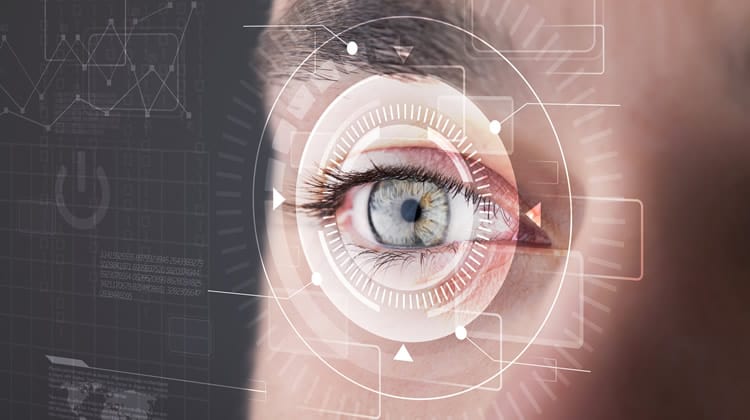
Why is eye tracking useful in the digital age?
As a marketer or business owner, the more you understand your target audience, the more chance you have of creating a fluent and engaging customer journey across marketing platforms.
As eye tracking provides a visual map of how your users engage with your website, landing pages, and mobile applications, you can identify strengths and weaknesses related to user experience (UX) and content placement.
An essential part of the consumer research process, eye tracking is a powerful medium as it taps into the fact that 95% of human decision-making (particularly online) is carried out sub-consciously.
Types of Eye Tracking
Currently, the studies use three main techniques:
- Stationary systems: Test participants sit in front of a computer, tablet, or smartphone that is equipped with infrared light emitters and cameras. Typically, this conducted in a laboratory setting. This device is invisible, so it does not affect the user’s behavior.
- Mobile or transportable systems: In this technique, users wear special eye-tracking goggles that include cameras and lenses. There are also virtual reality headsets with integrated eye tracking.
- Predictive systems: This technique uses specialized software that is capable of reproducing the habitual movement of the eyes in response to a given visual stimulus.
Objectives of Eye Tracking
Used to answer a large number of questions related to web usability, such as:
- What is the first element that users see on each of the pages of our digital website?
- Do the CTAs (call to action) immediately jump to the eye when entering the page?
- What navigation system works best for users to find relevant information?
- Are users reading the content or just glancing quickly through it?
- Are there any elements that are distracting users from the action we want them to take?
![Eye Tracking Software: How Science Helps You See Through Customer's Eyes [Infographic]](https://www.impactplus.com/hubfs/eye-tracking-software.jpg)
Benefits of Using Eye Trackers
When you have your participants work through your digital research naturally in a comfortable environment, they tend to be their most honest. This is why eye trackers are such a strong contender when it comes to researching behavior, interactions, and user experience.
Here are some of the benefits of eye-tracking results:
- Natural Behavior — the eye-tracking equipment is minimal making the environment less overwhelming.
- Subconscious Response — participants respond from a more instinctive place.
- Live Feedback — when performing the tests, you can receive a live feed from the participant’s reactions.
- Easy to Carry — the eye-tracking equipment is light and gives you the possibility of using in almost every environment.
- Correlation With the Subject — the data that you get from the eye trackers (i.e. heat maps, areas of interest, dwell time, etc.) when coupled with a timeline or a recording of the participant, can give an accurate reaction to particular triggers or stimuli.