
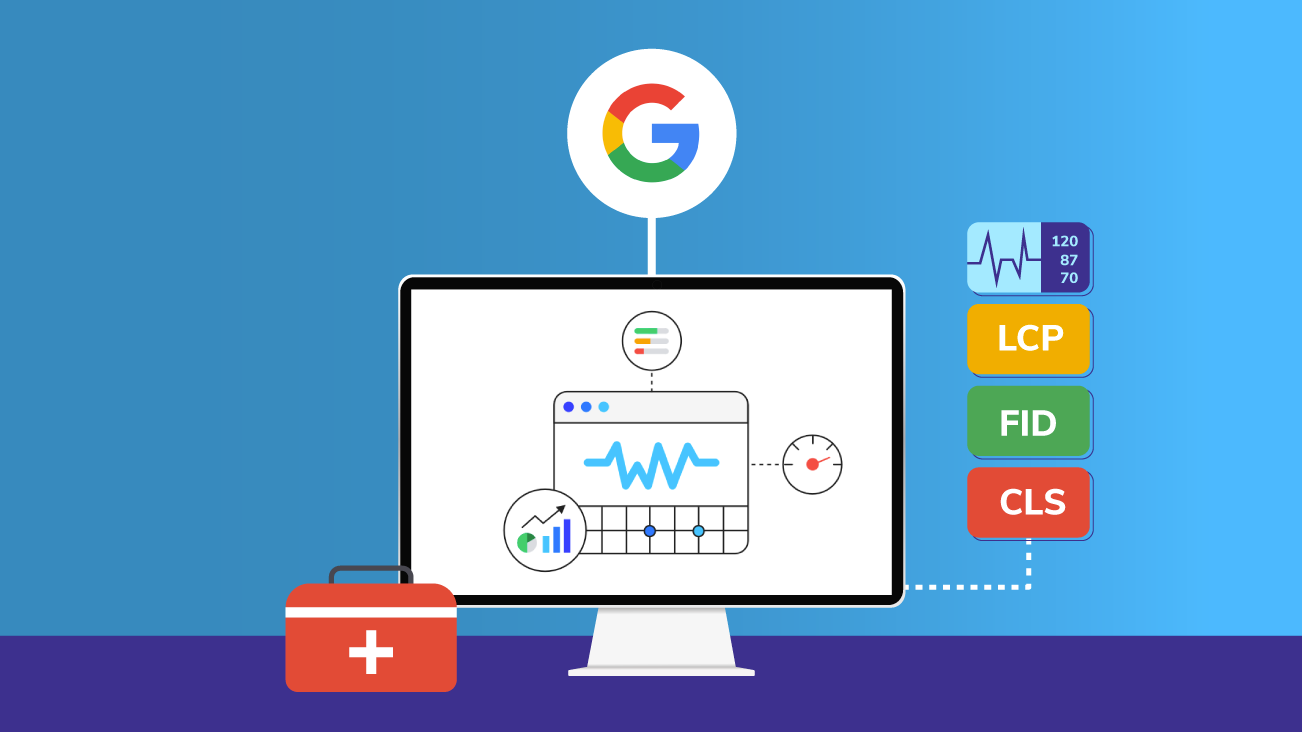
Why Core Web Vitals Matter for Your SEO?
Google’s focus on user experience through their Core Web Vitals metrics is one of the most important SEO trends to know about for the coming year. These metrics evaluate how quickly webpages load, how interactive they are and how stable the content remains – all key factors in a positive user experience.
Pages that perform well according to Google’s Core Web Vitals are more likely to show up in search results and rank higher. Conversely, pages with low Core Web Vitals scores may see their rankings decrease.
So what exactly are Core Web Vitals?
They consist of 3 key performance indicators:
- Largest Contentful Paint (LCP) measures how long it takes for the main page content to load. Pages with under 2.5 seconds LCP are considered good.
- First Input Delay (FID) evaluates how quickly a page responds to user input like clicks or touches. Under 100 milliseconds is good.
- Cumulative Layout Shift (CLS) detects unexpected layout shifts during page loading. Aim for below 0.1 to satisfy Google.
To measure your website’s Core Web Vitals, Google provides the Search Console tool as well as Lighthouse in Chrome DevTools. Both options offer insights into your scores on each metric and recommendations for improvement.
Some common strategies
For optimizing Core Web Vitals include minimizing webpage size through image compression and code optimization, leveraging a content delivery network and HTTP/2, inlining critical CSS, deferring non-essential resources, and using browser caching effectively.
While making changes, validate your results using either Google tool. Then, submit a Sitemaps file in Search Console and request a re-crawl to see if Google has detected any Core Web Vitals score increases for your pages.
With patience and testing, most sites can improve their Core Web Vitals to “good” or “needs some work” levels over time. Google plans to begin using Core Web Vitals scores in search ranking algorithms starting in May 2021.
In summary, optimizing for Core Web Vitals has become an integral part of an effective SEO strategy. Taking steps to reduce load times, improve interactivity and limit layout shifts will help deliver a faster, more stable experience for users. And in turn, that positive user experience may help boost your search visibility and organic traffic.
Focusing on Core Web Vitals in the coming year will prepare your website for Google’s transition and ensure your SEO remains on the right track.