
The Power of Entity Extraction
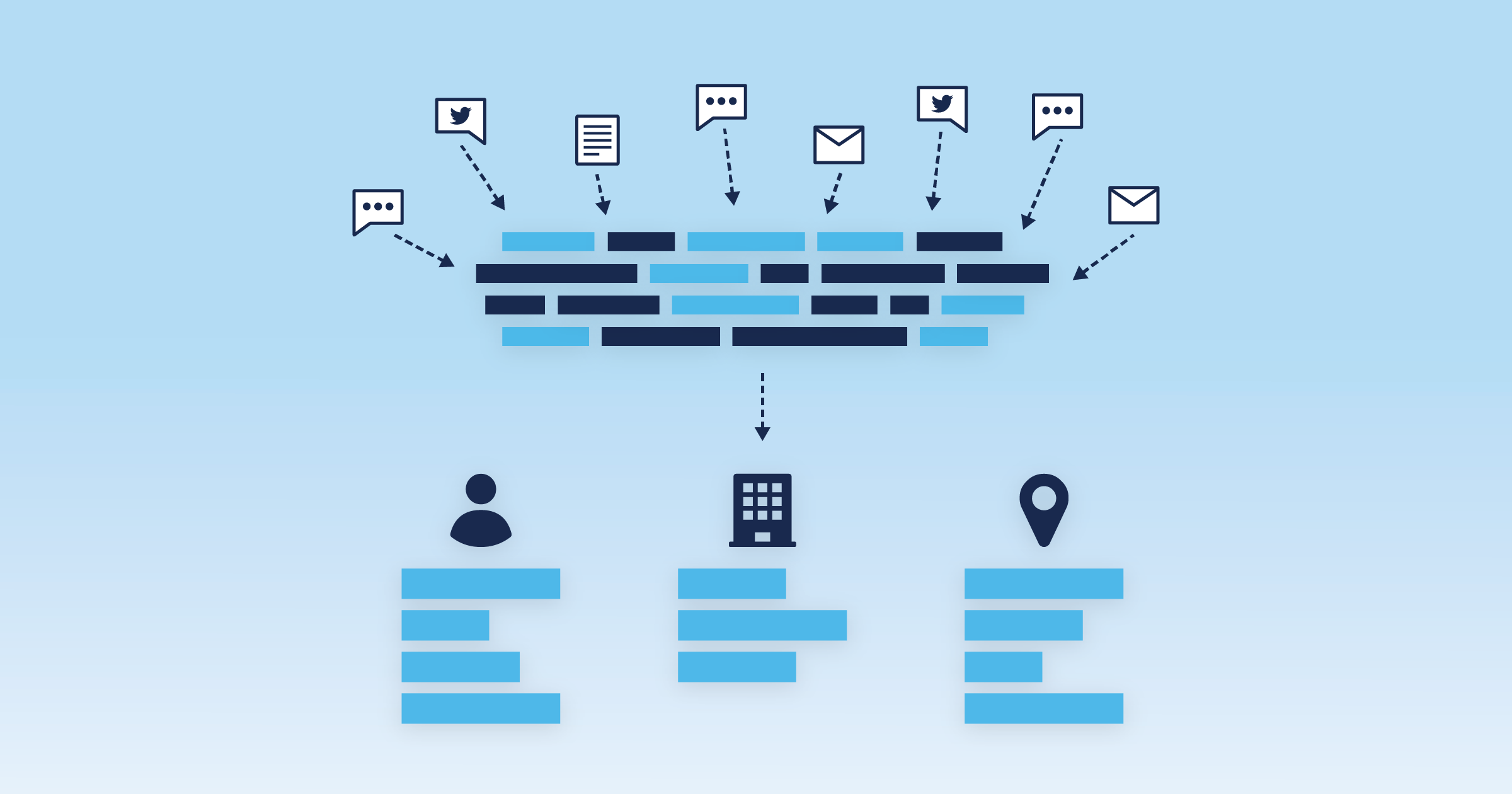
In the realm of data analysis and natural language processing, entity extraction has emerged as a power technique for unlocking valuable insights from unstructured text data. This blog explores the concept of entity extraction, its significance in data-driven decision-making, and provides practical insights on how businesses can leverage entity extraction to derive actionable intelligence.
Understanding Entity Extraction
- Definition: Entity extraction refers to the process of identifying and extracting specific entities or named entities from unstructured text data, such as names of people, organizations, locations, dates, or other relevant information.
- Significance: Also, By extracting entities, businesses can gain deeper insights into customer preferences, market trends, sentiment analysis, and enhance various applications, including customer service, content analysis, and social media monitoring.
The Benefits of Entity Extraction
- Data Organization: Entity extraction helps in structuring unstructured data, making it easier to analyze and derive meaningful insights.
- Contextual Analysis: By identifying entities, businesses can understand the relationships between different entities, facilitating more comprehensive analysis and decision-making.
- Enhanced Customer Understanding: Also, Entity extraction enables businesses to gain a deeper understanding of customer behavior, preferences, and sentiment.
- Improved Efficiency: Automating entity extraction reduces manual effort, saving time and resources in data processing.
Entity Extraction Techniques
- Rule-Based Extraction: Applying predefined rules and power patterns to identify entities based on specific criteria.
- Statistical Modeling: Also, Utilizing machine learning algorithms and statistical techniques to train models that can recognize and extract entities.
- Named Entity Recognition (NER): Also, Implementing pre-trained models or building custom models to identify and extract named entities.
- Hybrid Approaches: Combining rule-based and statistical techniques to achieve more accurate and comprehensive entity extraction.
Applications of Entity Extraction
- Customer Insights: Analyzing customer feedback, reviews, and interactions to understand preferences and sentiment.
- Competitor Analysis: Extracting information about competing businesses, their products, and market positioning.
- Social Media Monitoring: Also, Monitoring social media platforms to track brand mentions, customer sentiment, and emerging trends.
- Content Analysis: Also, Analyzing content to identify key topics, themes, and relevant entities for content optimization and personalization.
Implementing Entity Extraction in Business
- Data Preparation: Collect relevant data, clean and preprocess it to remove noise and ensure accurate extraction.
- Selecting Tools and Models: Explore available entity tools and models, considering their accuracy, scalability, and compatibility with your data.
- Customization: Fine-tune pre-trained models or build custom models to cater to specific business needs.
- Integration and Automation: Integrate entity into existing data pipelines and automate the extraction process for real-time insights.
Challenges and Considerations
- Language and Domain Specificity: Entity performance may vary across different languages and specialized domains.
- Ambiguity and Contextual Understanding: Resolving ambiguous entity references and understanding entities in the appropriate context can be challenging.
- Data Privacy and Security: Ensure compliance with data privacy regulations and implement robust security measures for handling sensitive data.
Conclusion
Entity extraction empowers businesses to transform unstructured text data into actionable insights, enabling better decision-making and driving competitive advantage. By harnessing the power of entity techniques and leveraging the potential applications, organizations can unlock valuable knowledge from their data, leading to improved customer experiences, targeted marketing strategies, and informed business decisions.