
Importance Of Augmented Reality in Digital Marketing
Augmented Reality in your Marketing Strategy
Augmented reality (AR) is an emerging trend within marketing and sales strategies. One that allows brands to give their customers unique experiences with the convenience of tapping into their mobile devices.
Mobile has become one of the most significant media types through which consumers interact with brands and make purchase decisions. AR gives you another tool in your belt when it comes to driving sales. As well as enhancing brand value through mobile devices.
What’s the difference between Augmented Reality and Virtual Reality?
It’s important to know that augmented reality and virtual reality (VR) are not the same. Virtual reality is the creation of a digital environment, while AR augments real environments with digital information. AR usership is expected to grow to 17% of people in 2022, with 83.1 million consumers in the U.S. already using AR monthly. AR tends to be more popular than VR because of its accessibility through equipment most of us have in our pockets. The breakout success of Pokemon GO in 2016 is a credit for the popularity of augmented reality mobile apps.

Types of Augmented Reality:
- Marker-based AR
This is when a device’s camera use to identify visual markers. Such as a barcode, in order to provide information relevant to the object on the screen. For this type of AR to work it’s important for the image captured by the device’s camera to have distinct points that can be marked. An example of marker-based AR is Hector & Karger’s interactive catalog.
- Markerless AR
With the use of data sources such as a device’s accelerometer and GPS tracking, markerless augmented reality used to determine measurements such as location and speed. This enables the device to show objects in a way that matches the camera’s environment. Markerless AR has become particularly useful for maps that allow users to find businesses in their area and other mobile apps. And that help users by accessing their geolocation. - Superimposition-based AR
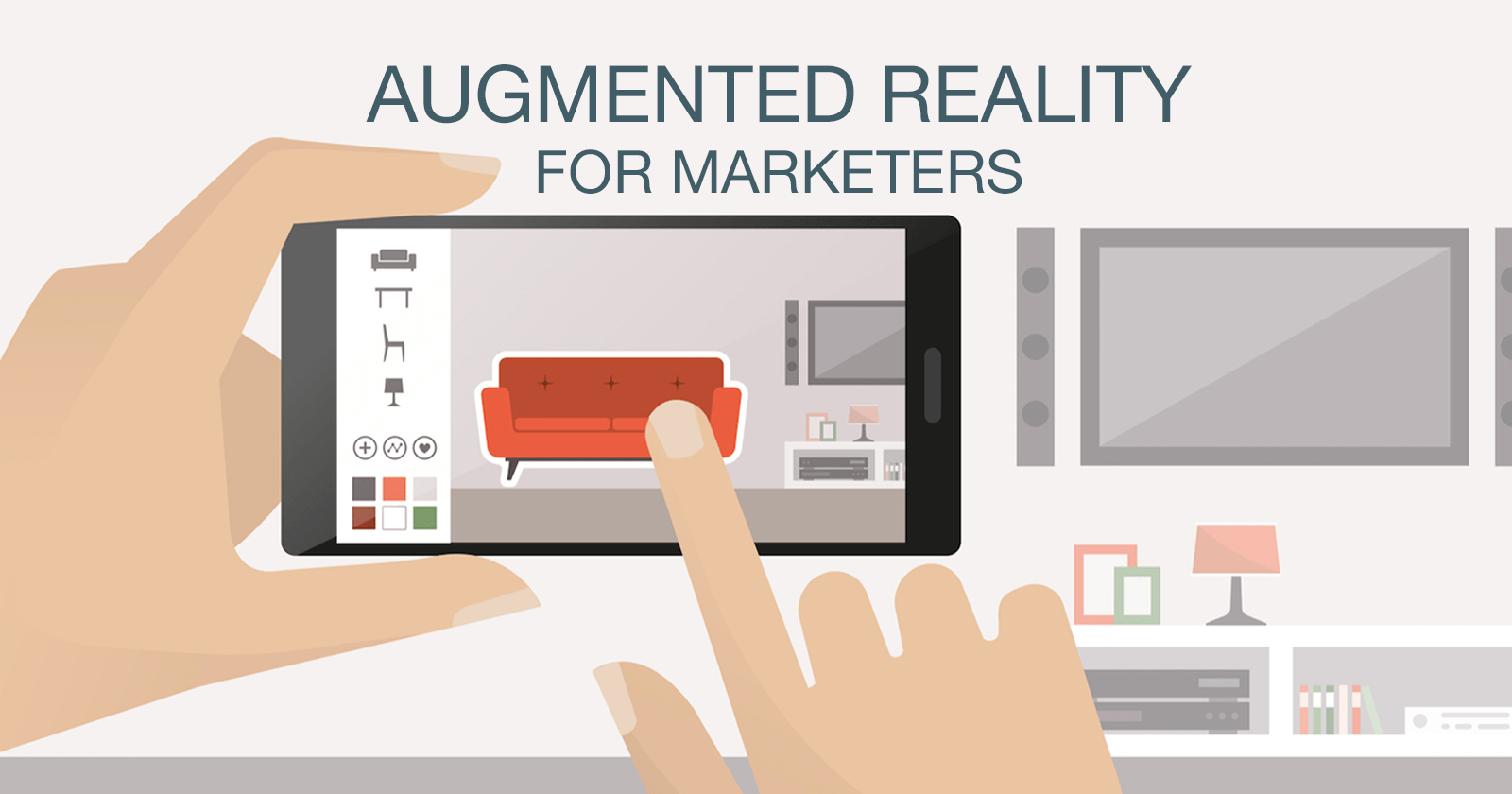
This is when object recognition use to replace or alter the appearance of a real image. Object recognition is critical for this type of augmented reality to work successfully. Placing a virtual sofa in a living room with IKEA Place is an example of superimposed augmented reality. - Projection-based AR
This type of AR projects artificial light onto real environments. This used for large-scale events and is, therefore, less relevant for mobile-focused marketers. This video from Microsoft Research shows how projection-based on this reality. Which is also known as spatial augmented reality, is experienced.

Benefits of AR for Mobile Marketers
Optimize the customer experience
Making use of augmented reality in your mobile marketing strategy is a smart way to give your users a unique and highly engaging customer experience.
Increase engagement
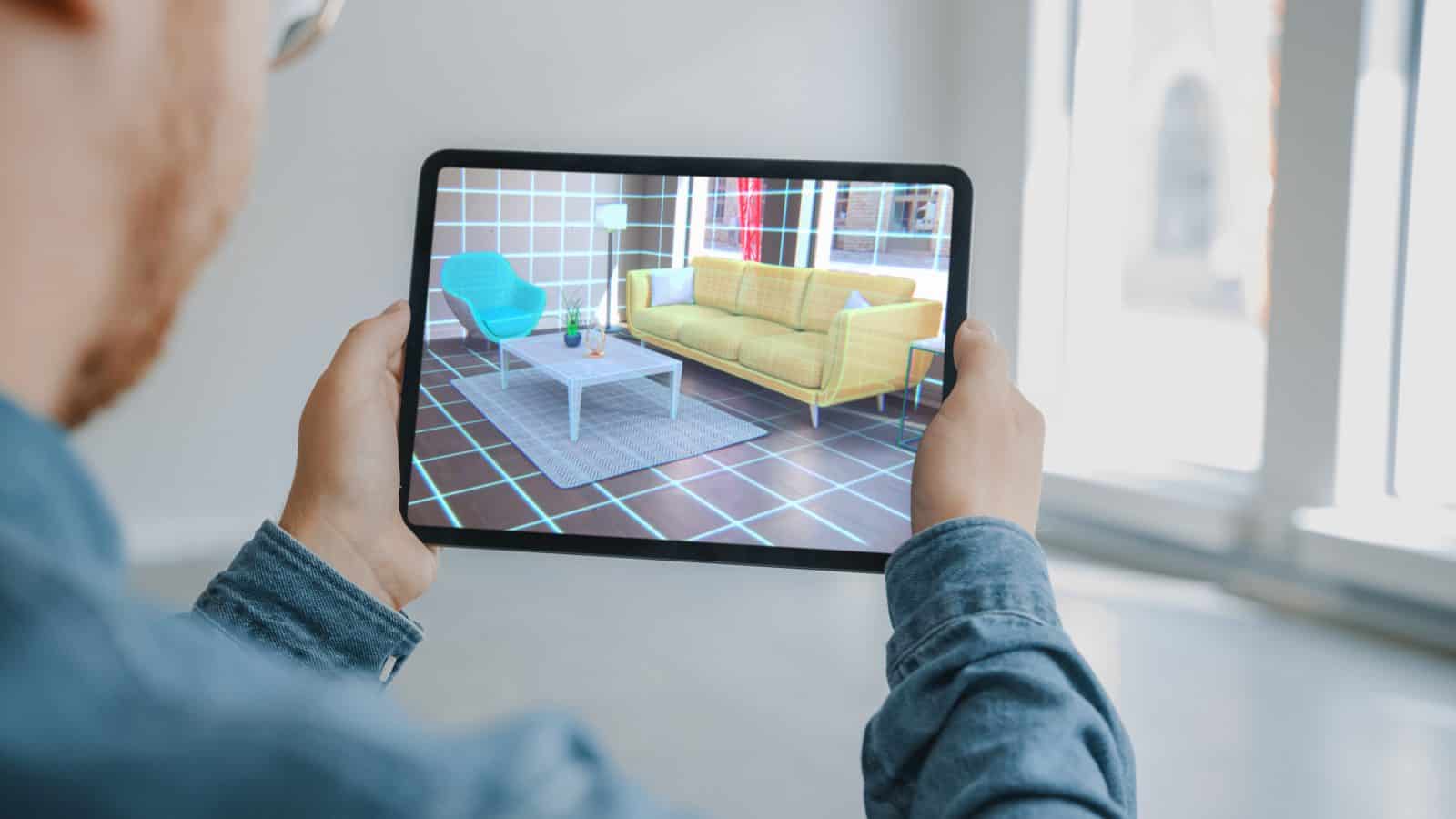
By including this reality in your mobile marketing strategy you can boost user engagement. The interactive nature of this marketing keeps users coming back for more. You can also improve engagement by using AR marketing to allow users to try before they buy.
Boost retention rates
Another benefit to the interactivity of augmented reality marketing is that users can retain for longer. This can be useful in spreading brand awareness and increase monetization opportunities.
Geo-targeting used to increase sales
Mobile marketers are already using geolocation as a tool. And AR can take that one step further.
AR presents personalization opportunities
With the right data, augmented reality allows mobile marketers to offer potential customers a personalized experience. Personalization can make a big impact on campaign performance. With 59% of shoppers claiming to have purchased something as a result of personalization.