

6 Reasons To Rebrand
Rebranding
On average, organisations and brands change their corporate identities once every seven to ten years. This often involves restyling logos, colour palettes, visual language and photographic style. In a small number of cases, the name of the organisation is also changed during this process. Although there is usually one main reason for making a change, the motivation behind a rebrand project is often a combination of several factors.
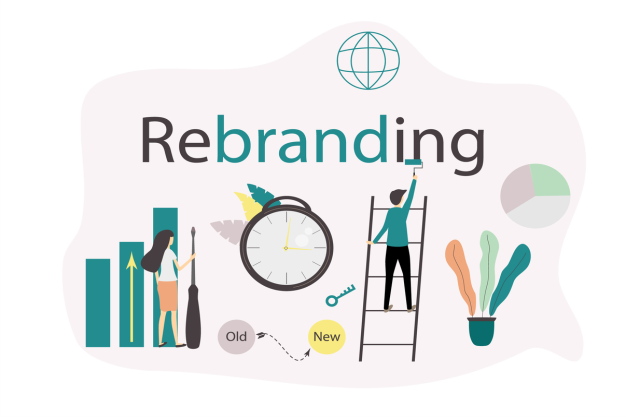
Reasons to Rebrand:
Your brand is lacking in vision
It happens. We start at business point A and end up at business point B and can sometimes lose our vision along the way. This can be common for people who have been in digital business for a long time.
Having a clear company vision drives profits, strategic operations, brand engagement from team members, brand loyalty from customers and a clear. And direct message of who you are and why you matter.
Re-branding helps to re-establish a company’s vision, mission and the strategic operations required to reset the path going forward.
You need to rebrand to adapt
Some businesses who have been around for a long time have struggled to adapt to the ever-changing technological. And cultural landscape the world now operates in. Adapting from old and traditional ways of business require companies to think and communicate differently. And sometimes to a completely new audience. This is where rebrand becomes a tool for survival.

You have a confused brand identity
It’s very common for new businesses to prioritise making money in order to keep the company alive in the initial months and years of business.
Quite often this results in a fractured or confused brand identity. Because many of the foundational branding components were missed. Maybe your product offering is confused or parts of your brand have become complicated?
Things like the website, social media, business cards, signage and even the logo may not form a cohesive brand experience. And it might be time to establish a strong and robust brand strategy to develop a deliberate brand identity and communication plan, to help the brand look. And most importantly deliver the best experience for digital customers.
You’re repositioning
Repositioning means there is a change to the industry you’re in. You’re branching out to new markets, you want to attract a new or different audience. Your competition has changed or you need to find a better way to differentiate yourself. Or you need to adapt to wider and bigger cultural movements affecting either your market or customers.
If any of these factors have changed you may need to look at ways to adapt your brand and strategy to ensure you don’t get left behind.
You’re struggling to communicate your value
Whether it’s around pricing, product or overall messaging, if you’re struggling to communicate your value it’s absolutely time to assess your brand strategy because something needs to change.
If you cannot communicate your value, then you cannot expect customers to understand why they should work with you. That’s what a strong brand designed to do – tie all of your value touch points together as an irresistible and multi-sensory experience targeted to your most ideal customer.
You have a bad reputation
With most of our lives now lived on social media negative reviews can spread fast and easily kill a brand. Without taking measured and deliberate steps it can be extremely hard to come back from a bad reputation. Whether that be your own doing or from previous owners or a disgruntled customer. Either way, reputation damage is not good news for a business.
Depending on how bad the reputation is, sometimes the only and last resort can be to re-brand the marketing business and start operating on a new and even playing field.