

How to Get Started with Agile Marketing?
What is Agile Marketing?
Agile marketing is an approach based on the principles of the agile methodology used in software development. It is specifically used for managing projects related to marketing.
The main objective of Agile marketing is to execute projects at a faster pace without compromising the quality of the deliverables. And to make this possible, you need to streamline everything ranging from team structure to project workflows and internal communication.
Generally, you need to develop a dedicated Agile marketing team that is familiar with agile fundamentals and capable of working efficiently in a fast-paced environment.
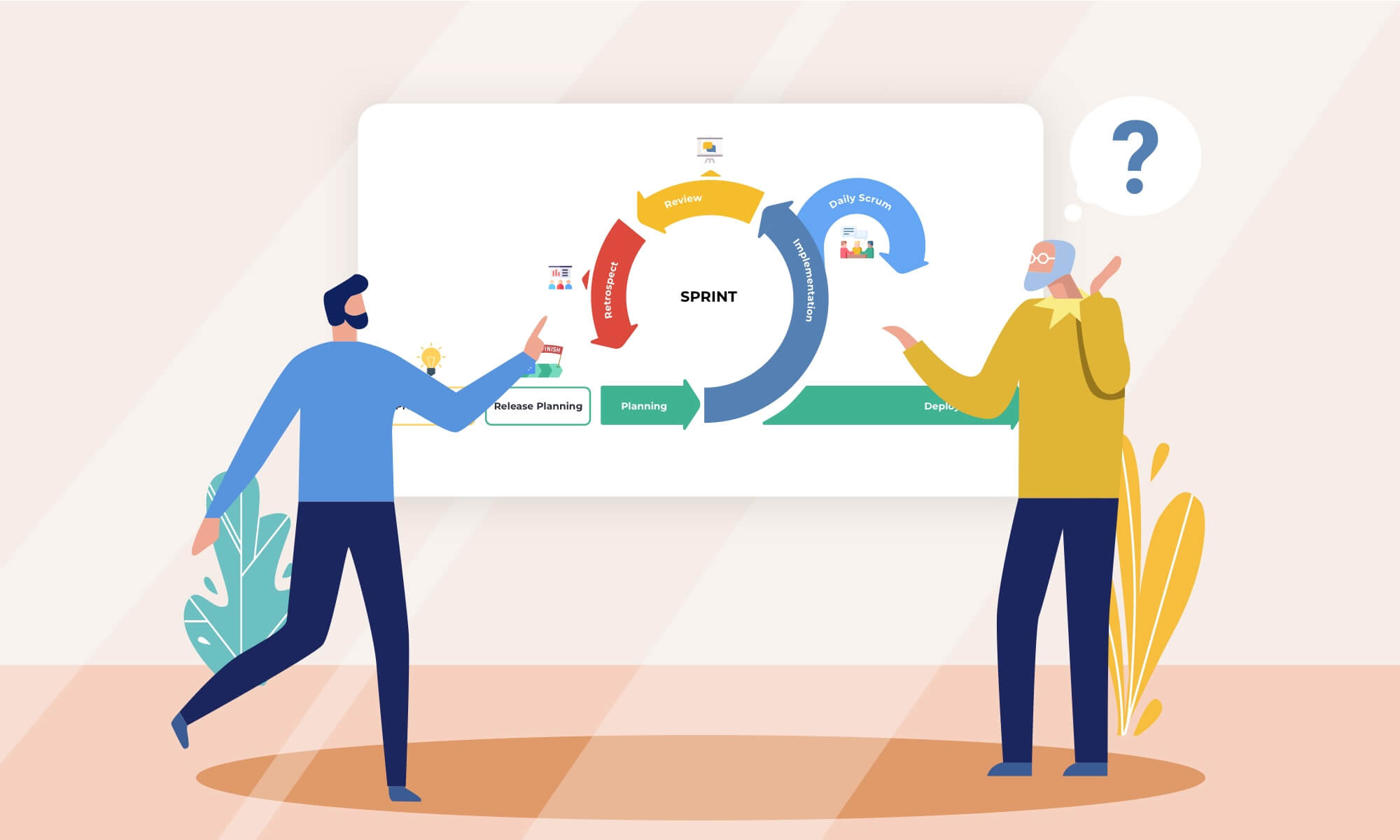
How to Implement Agile Marketing in Your Business?
Understanding Agile Fundamentals
The foremost thing that your marketing team needs to follow the agile approach is to learn its fundamentals. It’s imperative that you and your team members develop a clear understanding of how agile methodology works and what are its basic principles.
Additionally, it’s important that you discuss with your team members what they need to achieve with Agile marketing.
Working in Sprints
Sprint is the most important aspect of agile methodology. You need to divide the whole project work into multiple sprints. While the typical length of a sprint for agile project development is 2 weeks, the length of a sprint for Agile marketing is only 1 week. Sprints enable your team to execute work faster and yield better output.
To build an Agile marketing team, everyone should be well-aware of how sprints work. During a sprint, the team has to give their best to accomplish the planned tasks in a limited time frame. You need to plan sprints with your team, assess the performance of each sprint, and identify areas for improvement.
Tracking Task and Project Progress
For the agile approach to work effectively, you need to track the progress of work in each sprint. There are different ways of monitoring the progress of every single task. You can use conventional methods, like sticky notes or asking individual team members to get progress updates.
Team Collaboration
One particular thing that decides the performance of any agile team is collaboration. Speedy execution of tasks is the main highlight of agile and when working in a team, it’s essential that team members work together to create synergy.
For effective team collaboration, proper communication is a must. Your Agile marketing team needs to utilize reliable communication channels and tools to share information and start discussions quickly.
Scrum or Stand Up Meetings
Scrum or stand-up meetings are important for an agile team and need to be organized on a daily or weekly basis. These meetings demand the presence of all the members of your agile team. The main agenda of a scrum or stand-up meeting is to discuss the tasks at hand, issues or problems encountered by the team members, and innovative ideas to speed up the project development.

Benefits of Agile Marketing
- More productive teams: by changing the speed at which tasks are performed and planning the most appropriate time to execute, teams can work faster at a lower cost. In addition, by working in teams, workloads are less intense and workers are thus less likely to suffer from burnout.
- Higher customer satisfaction: by learning to work in sprints, workers are better prepared to deliver the digital services and products their customers need.
- Management transparency: with agile marketing, management, sales, and development can clearly see what the marketing team is working on. Transparency is further enhanced by the marketing team’s interaction with customer data.
- Real-time feedback: the biggest advantage is that the teams can provide and receive customer feedback at the end of each sprint. This means that the results will align better with the real needs of the customers.