

OTT and CTV Advertising: What’s The Difference?
OTT and CTV
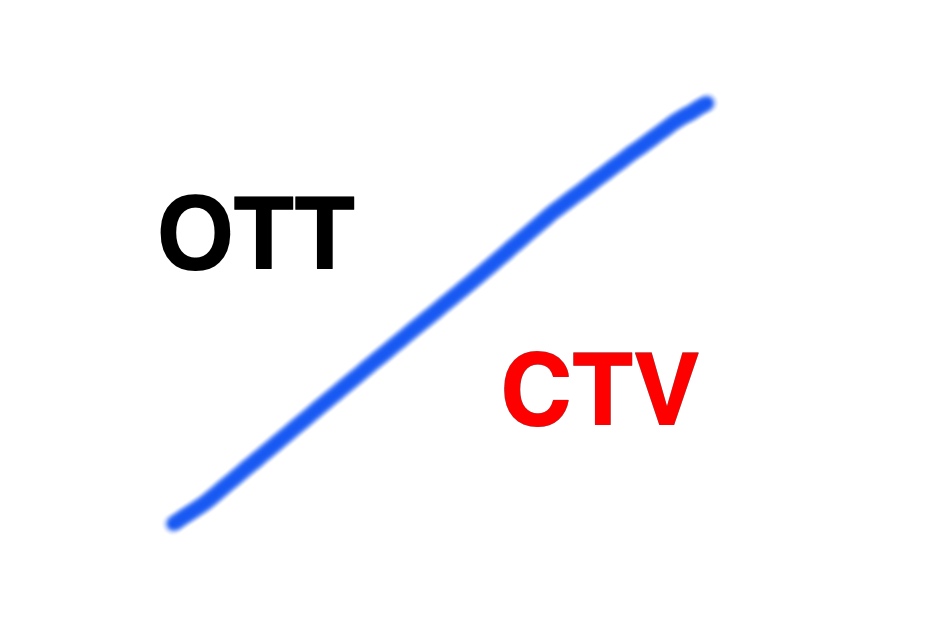
OTT and CTV are often used interchangeably, and can refer to the same thing. But importantly, OTT streams content across all devices such as mobile and desktop. Connected TV does not, but rather serves to TV screens.
Over-The-Top TV (OTT)
OTT stands for “over-the-top,” and it’s used to refer to video marketing content that is not served to customers through a traditional television system–such as cable or satellite.
In other words, OTT TV is any content that is separated from a traditional TV subscriber, and delivered directly over the internet. OTT services can typically be used on almost any device with an internet connection. Such as a laptop, tablet, connected smart TV, set-top box, or a device like the Apple TV, Amazon Fire TV, or Roku.
Each OTT service has a different type of subscription. Netflix, for example, does not run any ads, but charges a subscription fee.
Connected TV (CTV)
CTV stands for “Connected TV,” and it refers to the method by which most OTT content is delivered to users. It’s a term for any TV-connected device which can connect to the internet, and allow users to access their on-demand content.
CTV is the way that most viewers watch OTT services like Hulu and Netflix, and they have their own unique benefits when it comes to advertising.
What are the benefits of OTT and CTV?
OTT ads and CTV ads bring several benefits to the table:
Scale: Thanks to widespread internet penetration and technological advances like fiber-optic internet and 5G, OTT contents can reach large global audiences at scale.
Targeting accuracy: Granular targeting options based on behavior, technology, demography and geography are available, cross-screen.
Brand safety: Ads are delivered in a premium and brand-safe environment.
High completion rates: Ads on CTV devices are hardly ever skippable, even if they are, users are in a lean-back position when they are watching content on CTV devices. So they are more likely to embrace and tolerate the advertising. Therefore completion rates for CTV ads are well above 90%.
Creative ad formats: Ads on big screens like CTV devices will have a great impact on the audience. But it is not only the size, in comparison to ads on linear TV, CTV is also interactive on participating publishers. CTV devices can be the canvas for new creative and interactive ad formats. It can boost positive brand awareness or recognition.
Don’t Miss these Benefits as well:
Ad tolerance: People are more tolerant and open to ads they see while relaxing and watching entertaining content at home on their couch on TV. Especially when the ads are relevant to the user. CTV provides a similar experience to traditional TV, so users are accustomed and more tolerant towards advertising spots. So that they can enjoy their favorite TV shows.
Retargeting possibilities: Marketers can use their 1st party data to address their audiences on the big screen. Which is a big plus compared to linear TV buys.
Viewability: CTV ads have great viewability rates due to being delivered on the big screen. If you want your ad to be seen, go with the CTV screen. CTV can also be measured as opposed to linear TV.
Cross-device targeting: Messages can be amplified by retargeting CTV ad viewers across all of their digital devices.
Cross-device measurement: Using a device graph, you can measure a post-CTV impression activity and connect your ad spend to a business goal. Whether a user visits a website, walks-in to a store location or makes an online purchase.
Automatic Content Recognition (ACR) / Competitor Coquetting: Using technology that is built in TVs. You are able to target audiences who were already exposed to specific marketing TV ads.