

What About E-Commerce For Marketers?
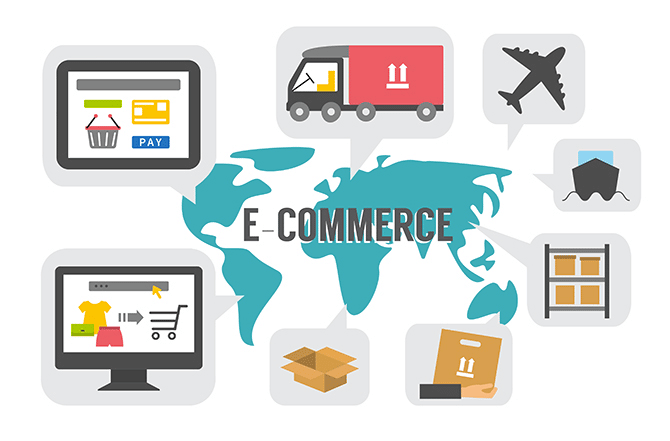
E-Commerce, commercial transactions conducted electronically on the internet. Also, it is the action of buying and selling products via Internet. With the rapid evolution of Internet, e-commerce become one the best options a marketer has whenever he’s thinking of digital marketing. Thus, it is the trading of digital marketing on the Internet, to trade products and services. Four mains categories of electronic commerce are given in the following list.
Types Of E-Commerce
Depending on their clientele, e-commerce companies often fit into one of four broad categories. There are other e-commerce business models as well, but they usually target certain industries and market segments. Organizations getting ready to create an e-commerce site may find it helpful to understand the fundamental distinctions between these models.
1. Business-To-Consumer (B2C):
A business sells directly to a customer in a B2C model. You are making a B2C transaction if you, the customer, buy a product from a retailer like Amazon. The B2C approach is also used if you open a Shopify store and sell directly to customers.
2. Second, Business-To-Business (B2B):
Selling goods or services from one firm to another is part of the B2B concept. An illustration would be a wholesale company selling components to another company that makes use of its products. There are situations when the purchasing company purchases goods at wholesale prices and then sells them for a profit.
3. Business-To-Consumer (C2B):
People who sell their goods or services to businesses online are included in the C2B paradigm. Bloggers and social media influencers who are paid by brands to promote their products may fall into this category.
4. Business-To-Business (C2C):
The majority of C2C e-commerce platforms incorporate online marketplaces where users can sell products and services to other users directly. A person selling undesirable stuff to someone else on eBay is one instance of this. Etsy and Facebook Marketplace are a couple of such venues.
Benefits of online e-commerce:
Here are some of the benefits of using e-commerce.
Reduced Operating Costs
Setting up and running a digital marketing or an online store is often less expensive than doing so for a physical location. You can save money by avoiding having to pay for things like fittings, signs, rent or a mortgage on a property. As a result of using Internet, e-commerce become of the main ways to reach more customers and to improve your marketing.
Extended Hours:
An online store is never required to close. Even when you aren’t keeping an eye on things, customers can access the site and finish their transactions at any time. However, with a good performance of the e-commerce, business companies can run their marketing without keeping an eye on working time. Thus, customers and marketers can access the store any time, in vacancies, at night..
Reach Global Audience
Customers who attend physical stores and their location are their only audience. You may greatly increase your market by selling to people all over the world with an online store. E-commerce does not need locations nor physical attendance. Thus, customers and clients can buy from your store and pay with different tools such as visa card and credits.
Increase Sales Conversions
The internet opens up more avenues for marketing. This feature allows for more individualized interactions with customers to reach them at the right time to make a purchase. You can connect with customers who are actively looking for products and services like yours through social media, SEO, and other channels. Although, you can use many tips to optimize your marketing.These channels may even enable single-click purchases from interested customers.