

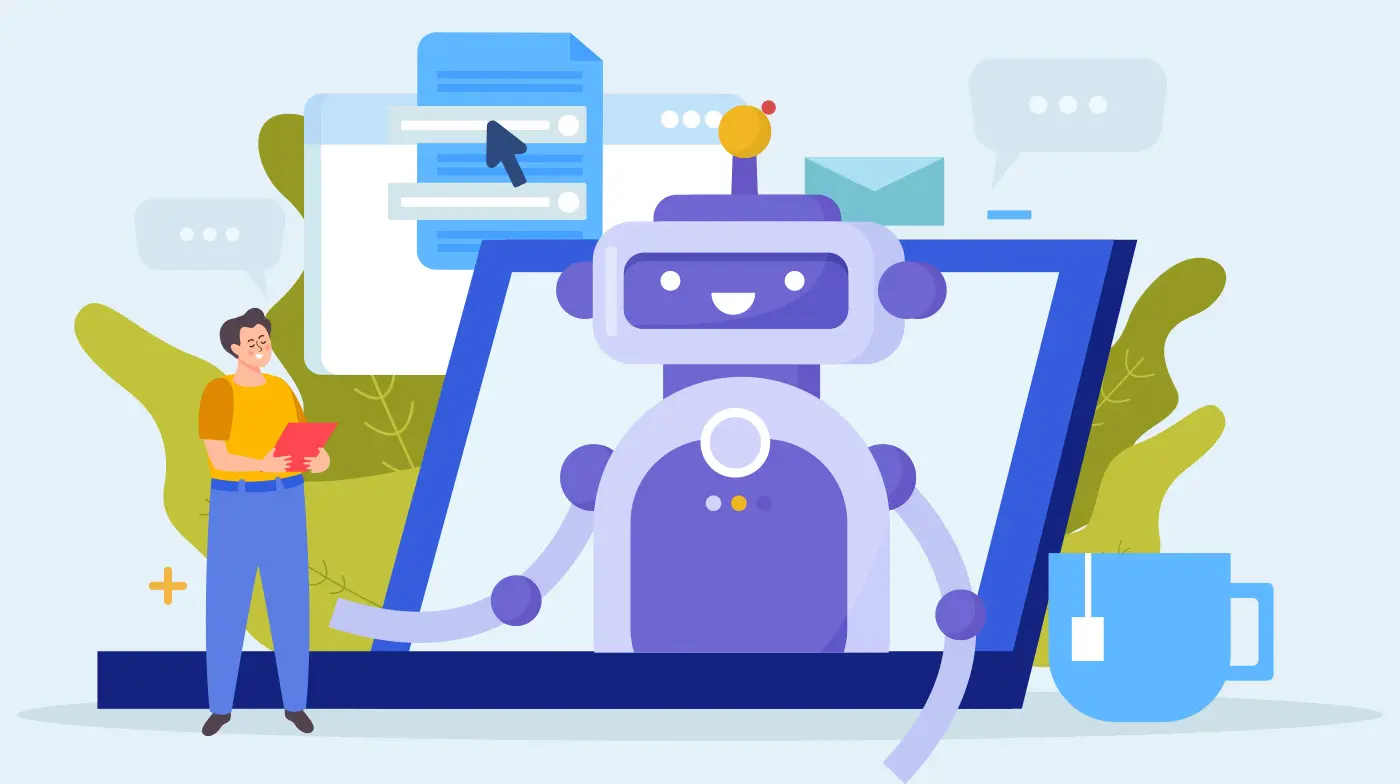
AI-Driven Marketing Automation: Moving Beyond Basic Workflows to Intelligent Customer Journeys
Explore how AI is enhancing marketing automation platforms to create more dynamic and personalized customer experiences.
Marketing automation. It used to be about setting up simple rules and sequences. Think: “If someone downloads this, send them that.” Effective? Sure. But intelligent? Not quite. Now, Artificial Intelligence (AI) is stepping onto the stage, and it’s changing the game. We’re moving beyond those basic “if-then” scenarios to a world where automation feels less like a process and more like a fluid, personalized conversation with each customer.
Imagine this: instead of a clunky, pre-programmed experience, your customer journey becomes a smooth, smart, and even delightful interaction. That’s the promise of AI-driven marketing automation.
I. From Cogs to Brains: The Evolution of Marketing Automation
- Automation 1.0: The Rule-Based Era: In the beginning, marketing automation was all about efficiency. Tools helped us schedule emails, manage social media posts, and track basic customer interactions. It was about streamlining tasks, but on the other hand it often lacked the ability to truly understand and adapt to individual customer needs.
- Automation 2.0: The AI Infusion: AI is now injecting brainpower into automation. It’s not just about what happens next; it’s about why it happens, and how to make it better. AI-powered systems can:
- Learn: They analyze customer data and behavior, getting smarter with each interaction.
- Predict: They anticipate customer needs and even future actions.
- Personalize: They tailor experiences in real-time, making every interaction feel relevant and valuable.
- Orchestrate: They coordinate complex customer journeys across multiple channels, creating a unified and seamless experience.
II. AI in Action: Crafting Intelligent Customer Journeys
AI is transforming how we connect with customers at every stage, from the moment they first discover us to the moment they become loyal fans.
- Personalization That Gets You:
- AI analyzes customer data to understand individual preferences and deliver highly tailored content, offers, and recommendations.
- Example: Think of Netflix. It’s not just “here are some movies.” It’s “Based on your love for dark comedies, your recent of British crime dramas, and the fact that you watched ‘Fleabag’ three times, here’s a new show you’ll absolutely adore.”
- Predictive Marketing: Reading the Customer’s Mind (Almost):
- AI can predict customer behavior and intent, allowing marketers to proactively engage with them at the right time and with the right message.
- Example: Imagine an e-commerce store. AI can track a user’s browsing and cart abandonment patterns to predict when they’re most likely to purchase. It can then automatically trigger a highly personalized discount offer, delivered at the perfect moment.
- Conversational AI: Chatting with Customers (Like, Really Chatting):
- AI-powered chatbots and virtual assistants provide instant and personalized customer service, answering questions, resolving issues, in addition to guiding customers through complex processes.
- Example: Think of a company website. An AI chatbot doesn’t just answer basic FAQs. On the other hand, it understands the context of a customer’s question, provides detailed solutions, offers relevant product recommendations, and seamlessly escalates complex issues to a human agent, all within a natural, conversational flow.
- Content Creation and Optimization: AI as Your Creative Partner:
- AI assists with content creation, generating personalized ad copy, social media posts, and even long-form content, helping marketers scale their efforts and also create more targeted messaging.
- Example: Imagine creating ads. AI can analyze audience data and generate different versions of ad copy and visuals, testing them in real-time to see what resonates best with specific customer segments. So it’s like having a creative team that never sleeps.
III. The Rewards: Why Embrace AI-Driven Automation?
- Customers Who Feel Seen and Heard: AI creates more relevant, personalized, and engaging interactions, therefore fostering stronger customer relationships and building loyalty.
- Efficiency That Frees You Up: AI automates tasks, freeing up marketing teams to focus on strategic planning, creative initiatives, in addition to those uniquely human elements that AI can’t replicate.
- Data-Driven Decisions, Smarter Strategies: AI analyzes data to identify patterns and insights, enabling data-driven decision-making and campaign optimization. SoiIt’s like having a super-powered analyst on your team.
- ROI That Makes Sense: By automating tasks, personalizing experiences, and optimizing campaigns, AI helps marketers achieve better results and therefore maximize their return on investment.
IV. Stepping into the Future: AI Automation Tools
Here are some examples of AI tools that are shaping the future of marketing automation:
- For Personalized Recommendations:
- Amazon’s Recommendation Engine: A classic example of AI personalizing the shopping experience.
- For Chatbots and Conversational AI:
- For Content Creation:
- For Marketing Automation Platforms:
- HubSpot: Offers AI-driven automation for email marketing, lead nurturing, and workflows.
- Salesforce Marketing Cloud: A robust platform for automating marketing campaigns and customer journeys with AI.
- Sprinklr: An AI-powered platform for managing social media marketing, customer service, and digital experiences.
V. The Horizon: AI as the Architect of Customer Journeys
AI is not just a tool; it’s becoming the architect of the customer journey, designing experiences that are:
- Hyper-Personalized: AI will deliver increasingly granular and individualized experiences, anticipating customer needs and providing proactive solutions, often before the customer even realizes they have them.
- Autonomous: AI will increasingly automate complex marketing tasks, from campaign planning and execution to real-time optimization, working more and more independently, thus freeing marketers to focus on strategy and creativity.
- Seamlessly Integrated: AI will become more deeply integrated into marketing platforms and tools, providing a unified and intelligent marketing ecosystem, and therefore making the customer experience feel effortless and intuitive.
Conclusion: The Age of Intelligent Marketing
As a conclusion, the future of marketing is intelligent, and it’s being shaped by AI. This isn’t just about automation; it’s about a fundamental shift in how we connect with customers. By embracing AI’s transformative potential, marketers can create experiences that are not only efficient but also deeply engaging, personalized, and ultimately, more human. The age of intelligent marketing is upon us, and those who adapt will be best positioned to thrive.
Ready to make AI data-driven decisions for your brand?
Creatives can help!
Our team of AI-powered digital marketing experts can guide you in harnessing the power of data to achieve your marketing goals.
Schedule a consultation to learn how our AI-powered solutions can drive growth.