

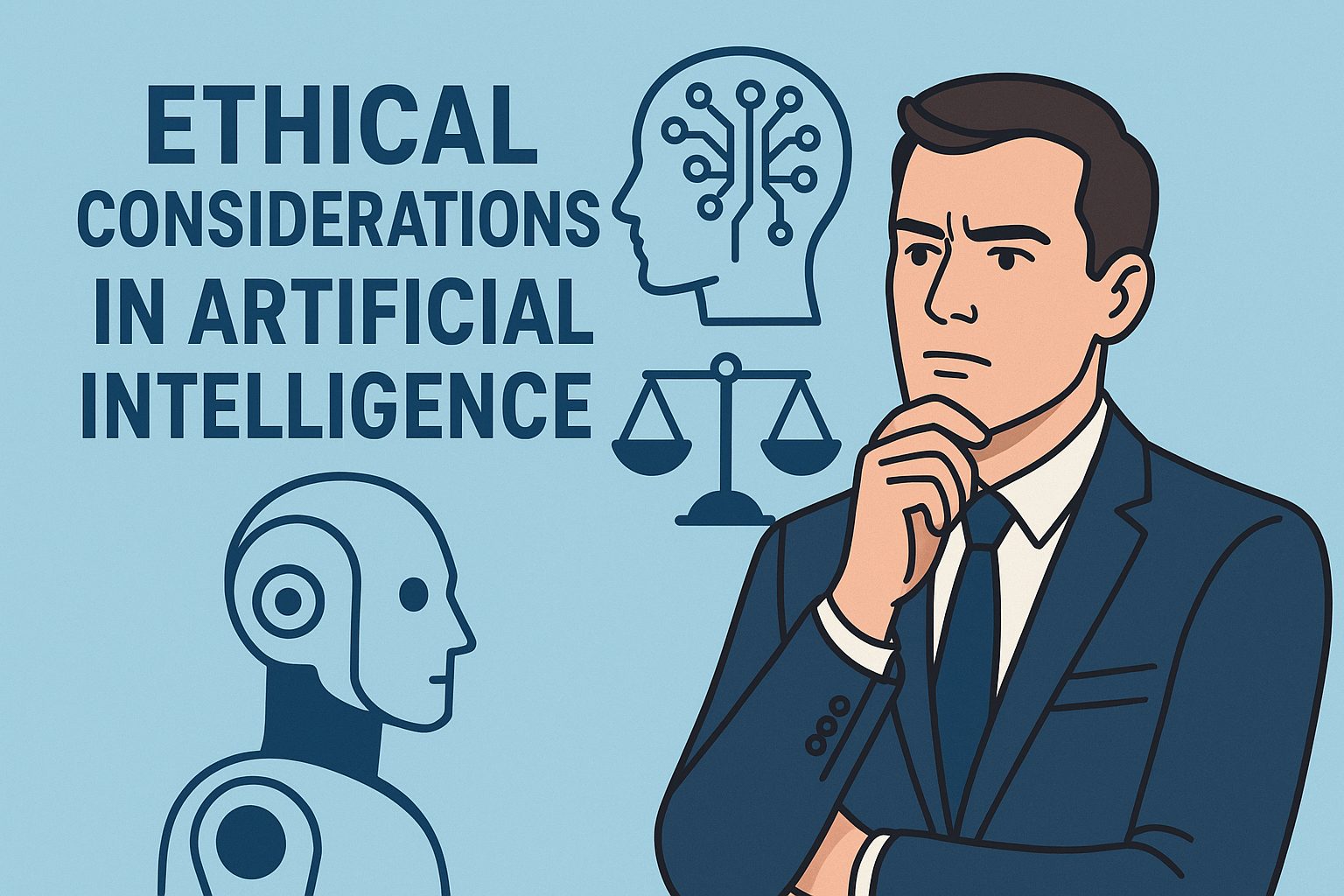
Ethical Considerations in Artificial Intelligence
Artificial Intelligence (AI) is transforming industries, reshaping how we work, communicate, and make decisions. Yet, as AI becomes more integrated into daily life, it raises profound ethical questions that go far beyond technical progress. Ethical considerations in AI, such as data privacy, algorithmic bias, and transparency, have become central to discussions about responsible innovation. The responsibility to use AI ethically now sits firmly with developers, policymakers, and organizations alike.
Balancing progress with responsibility ensures AI enhances human life without compromising fairness, transparency, or trust.
Key Ethical Considerations and Challenges in AI Development
AI’s rapid evolution brings several pressing ethical concerns. Recognizing and addressing them early allows us to build more responsible systems.
- Bias and Discrimination: AI models often learn from biased data, which can lead them to make unfair hiring, lending, or law enforcement decisions.
- Data Privacy: Companies that collect and analyze large amounts of personal data must protect user privacy and obtain clear consent.
- Transparency: Many AI systems operate as “black boxes,” and developers must work to explain how these systems make decisions.
- Accountability: When AI causes harm or error, organizations must take responsibility and ensure clear lines of oversight.
- Job Displacement: As automation expands, businesses and governments should help workers adapt and reskill for new opportunities.
By confronting these issues directly, innovators can guide AI toward fairness and positive social impact.
The Role of Regulation and Corporate Responsibility
Ethical AI is not just a philosophical discussion — it’s a practical business priority. Companies that take ethical action earn customer trust and long-term success.
- Adopt Ethical Frameworks: Businesses should create and follow clear ethical policies throughout AI development and deployment.
- Ensure Human Oversight: Keep people involved in critical decisions that affect rights, safety, or wellbeing.
- Promote Algorithmic Transparency: Let users understand how AI reaches its conclusions instead of hiding behind complexity.
- Protect Data: Comply with privacy laws like GDPR and handle customer data with care and transparency.
- Audit for Bias: Regularly test AI systems, identify unfair patterns, and fix them before they impact users.
By leading with integrity, organizations turn ethical responsibility into a source of strength and innovation.
Building a Human-Centered AI Future with Ethical Considerations in Mind
True innovation happens when technology aligns with human values. Governments, researchers, and businesses must collaborate to make AI more inclusive and ethical.
- Educate and Raise Awareness: Developers and users alike should learn how to spot and address ethical challenges.
- Design Inclusively: Build AI systems with diverse teams to reduce bias and create broader representation.
- Review Continuously: Treat AI ethics as an ongoing process that evolves alongside new technologies.
When we place people at the center of AI development, technology becomes a tool for empowerment rather than exploitation.
Balancing Progress with Responsibility
AI holds tremendous promise — but the way we shape it will define its legacy. By prioritizing ethical considerations in AI, we ensure that innovation grows alongside fairness, accountability, and respect for human dignity.
The most advanced AI systems won’t just be intelligent — they’ll be transparent, responsible, and deeply human.
Ready to make AI data-driven decisions for your brand?
Creatives can help!
Our team of AI-powered digital marketing experts can guide you in harnessing the power of data to achieve your marketing goals.
Schedule a consultation to learn how our AI-powered solutions can drive growth.