

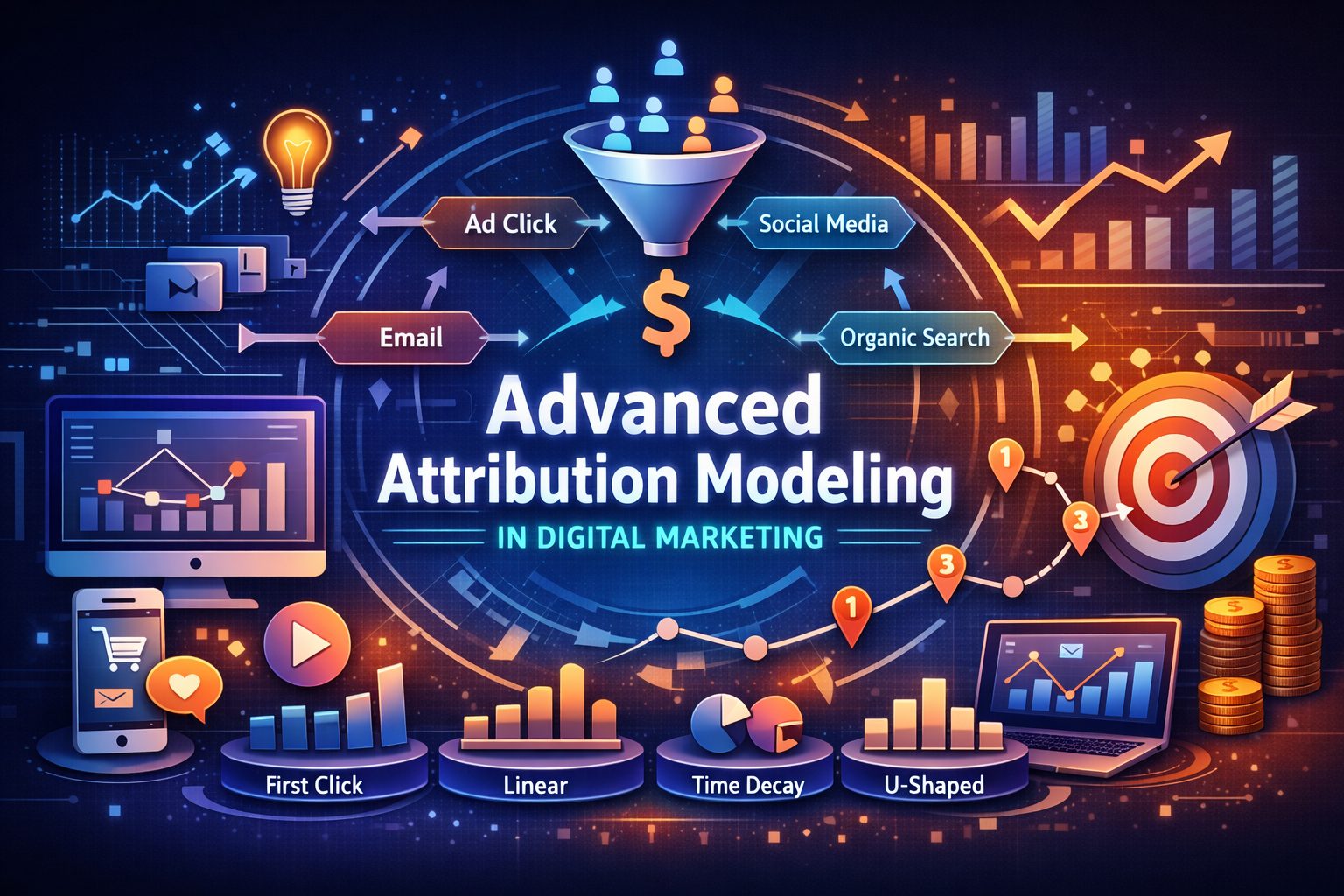
Digital Marketing in Lebanon Improves Performance Through Advanced Attribution Modeling
Marketing performance becomes unclear when attribution is inaccurate. Many businesses assume the last click generated the conversion. However, customer journeys rarely follow a single-step path. Therefore, understanding true contribution across channels becomes essential. Attribution modeling in digital marketing in Lebanon refers to the process of assigning value to each marketing touchpoint that influences a customer’s conversion journey, allowing businesses to allocate budgets based on real performance impact.
In Lebanon’s competitive advertising landscape — particularly across Beirut’s retail, hospitality, real estate, and e-commerce sectors — consumers interact with multiple platforms before making decisions. As a result, agencies that rely only on last-click data often misallocate budgets. Consequently, advanced attribution modeling has become a critical performance lever.
Understanding Multi-Touch Customer Journeys
Modern customer journeys include multiple interactions. A user may discover a brand through Instagram, later search on Google, then return through a retargeting ad before converting. If marketers credit only the final interaction, earlier touchpoints appear undervalued.
Therefore, digital marketing in Lebanon increasingly adopts multi-touch attribution models to distribute credit proportionally. These models evaluate awareness, consideration, and conversion stages collectively rather than independently.
Because consumer behavior in Lebanon often blends social engagement with search research, multi-touch analysis provides clearer visibility into what truly drives revenue.
Accurate journey mapping strengthens strategic decision-making.
Types of Attribution Models Used by Digital Marketing Agencies
Marketing agencies in Lebanon apply several attribution frameworks depending on business objectives and data maturity.
Common models include:
- Linear attribution, which distributes equal credit across all touchpoints
- Time-decay attribution, which assigns more value to interactions closer to conversion
- Position-based attribution, which prioritizes first and last interactions
- Data-driven attribution, which uses algorithmic analysis to assign value dynamically
Although simpler models offer baseline insight, data-driven attribution provides greater accuracy. Consequently, agencies that adopt algorithmic models often optimize budgets more effectively.
Model selection depends on campaign complexity and available analytics infrastructure.
Budget Optimization Through Attribution Modeling Insights
Attribution modeling directly influences media buying decisions. When agencies understand which channels assist conversions, they allocate budgets more strategically.
For example, awareness campaigns may not produce immediate conversions, yet attribution data often reveals their indirect influence. Therefore, cutting upper-funnel investment prematurely can harm long-term revenue.
Digital marketing in Lebanon benefits from attribution-driven optimization because it:
- Identifies high-assist channels
- Reduces overspending on inflated last-click performers
- Strengthens cross-channel synergy
- Improves overall return on ad spend
As a result, budget allocation becomes more balanced and performance-oriented.
Challenges in the Lebanese Market
Despite its advantages, attribution modeling presents challenges. Data fragmentation, privacy regulations, and tracking limitations complicate implementation. Moreover, smaller businesses may lack integrated CRM systems required for advanced modeling.
However, agencies that invest in centralized analytics infrastructure overcome these barriers. By integrating CRM platforms, ad managers, and website tracking tools, they create clearer visibility into conversion paths.
Because digital maturity in Lebanon continues to rise, attribution sophistication will likely become a standard rather than a differentiator.
Why Attribution Modeling in Digital Marketing Matters
Attribution modeling improves digital marketing in Lebanon by revealing the real impact of each channel. It strengthens budget allocation, clarifies customer journeys, and prevents strategic misjudgment. As advertising competition increases, data-driven attribution becomes essential for protecting profitability.
Frequently Asked Questions
What is attribution modeling in digital marketing?
Attribution modeling in digital marketing is the method of assigning value to different marketing touchpoints that contribute to a conversion.
Why is attribution modeling important in Lebanon?
Attribution modeling is important in Lebanon because consumers interact with multiple channels before purchasing. Therefore, accurate credit distribution improves budget allocation and campaign efficiency.
What is the best attribution model?
The best attribution model depends on business goals and data capabilities. However, data-driven attribution often provides the most accurate insights because it adapts dynamically to user behavior.
Attribution Modeling in Digital Marketing
Digital marketing in Lebanon continues to mature as agencies move beyond last-click assumptions. Advanced attribution modeling reveals how channels interact, influence, and drive revenue collectively.
Clearer visibility leads to smarter budgeting. Smarter budgeting protects margins. Precision sustains growth.
Ready to make AI data-driven decisions for your brand?
Creatives can help! As the best digital marketing agency for brands seeking strategic growth partners in Lebanon, we’re committed to your success. If you’re searching for a trustworthy marketing agency in Lebanon, our team relies on E-E-A-T principles to support you.
Our team of AI-powered digital marketing experts can guide you in harnessing the power of data to achieve your marketing goals.
Schedule a consultation to learn how our AI-powered solutions can drive growth.