
The Difference between SEO and SEM
Search Engine Marketing (SEM) and Search Engine Optimization (SEO) are often confused and thought to be the same thing. Let’s understand the difference between SEM and SEO. SEO mainly focuses on optimizing a website in order to get traffic from organic search results, while SEM is used to get traffic from both organic and paid searches. In other words Google has divided searches into paid and non-paid categories.
When planning your next digital campaign, should you opt for SEO or SEM? The answer is simple; choose both. Each of the two has different functions, tactics, goals and results.
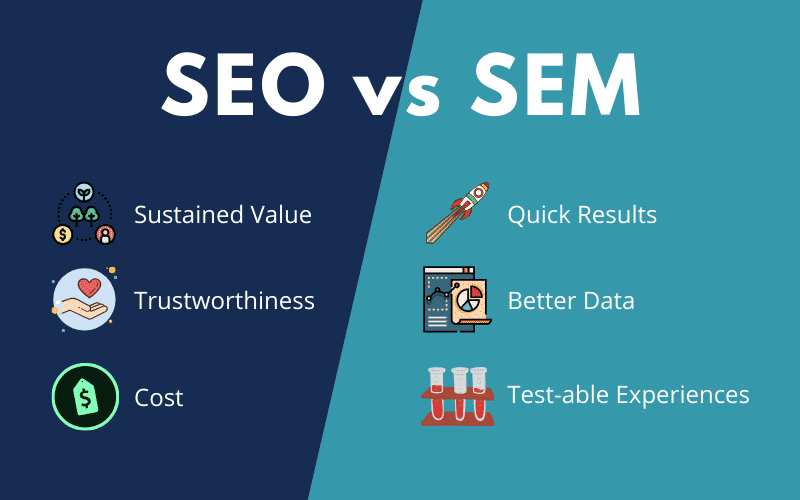
SEM is always more costly that SEO but can render results way faster, which are almost immediate to the start of the campaign. On the other hand SEO is way less expensive but can take 90-120 days to bring back adequate results.
SEO focuses on keywords that can do wonders to any company or brand on the long if executed carefully and creatively. SEO is known to improve a brand’s image and create customer loyalty. Statistically, Google processes 73K searchers every second which is a vast number for SEO success, bearing in mind that SEO is ever-evolving so the way SEO is handled should be changed regularly as well. SEO is also known to generate great leads for businesses.
SEM, also known as paid search is great for obtaining instant results. It could well be used as a complement to SEO, but not as a replacement. One big benefit of SEM is that is can enhance visibility versus that of your competitors. Additionally, SEM is target market oriented, more so than SEO. You can target and tag specific users while showing them ads on other sites that will drive them back to yours.
There isn’t really a right or wrong answer when it comes to choosing between SEO and SEM. It all depends on:
1- The size of your business.
2- How much money you are willing to spare or spend.
3- The speed at which you want your company or brand to gain results.
4- Your Return on Investment (ROI).
5- Your target market(s).
The best digital marketing strategy is one that includes both SEO and SEM, but more SEO on the long-term brings in bigger and better results and is a safer bet for brand longevity.