

What Is Generative Engine Optimization (GEO)?
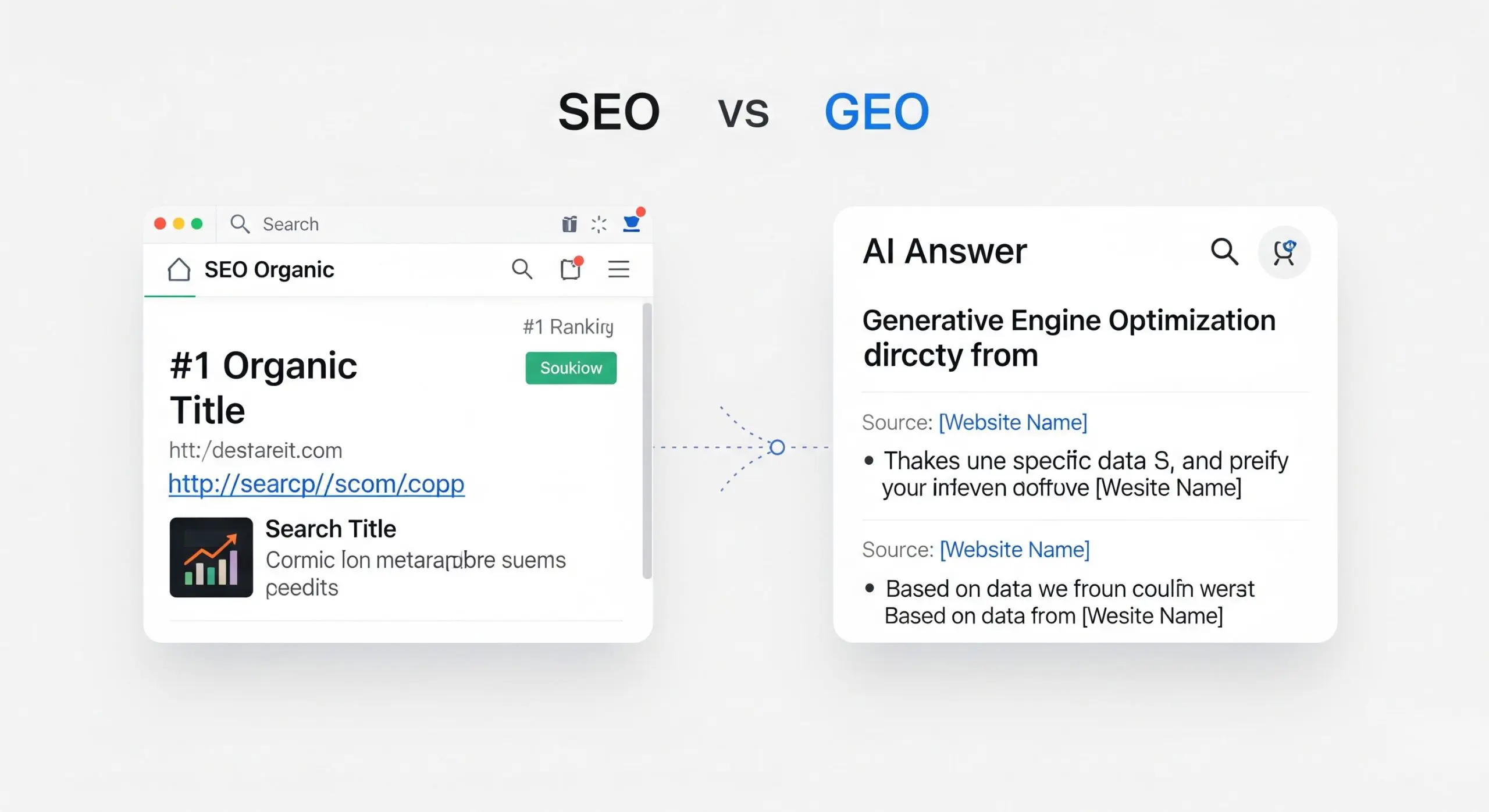
Generative Engine Optimization (GEO) is the strategic process of creating and structuring your website’s content to be easily found, understood, and cited by AI-driven search engines like Google’s AI Overviews, ChatGPT, and Perplexity. Unlike traditional SEO, which focuses on ranking a list of blue links for users to click, GEO aims to get your information featured directly within the AI-generated answers and summaries.
As search evolves from a list of results into a conversation that provides direct answers, GEO is becoming a crucial component of a comprehensive digital marketing strategy. This guide will break down what GEO is, how it differs from traditional SEO, and the actionable steps you can take to optimize your content for the new era of search.
What Is Generative Engine Optimization (GEO)?
Think of GEO as the next evolution of search optimization. For decades, the goal of SEO has been to signal to search engines that your webpage is the most relevant result for a specific keyword, aiming to secure a high-ranking position that earns a click.
Generative Engine Optimization (GEO), on the other hand, is the practice of shaping your content so that Large Language Models (LLMs) see it as a trustworthy and authoritative source, making it ideal to feature in their generated responses. So the goal shifts from simply earning a click to becoming part of the direct answer itself.
This is a critical distinction. As users get immediate, synthesized answers from AI, they may not need to click through to any website. If your brand isn’t cited as a source within that AI-generated response, you become invisible.
GEO vs. SEO: What’s the Real Difference?
While both GEO and SEO aim to increase online visibility, their approaches and objectives are fundamentally different. Traditional SEO focuses on achieving a high rank in the list of blue links, with the primary goal of earning a user’s click. Its success is measured by metrics like click-through rate (CTR) and time on page. In contrast, GEO’s primary goal is to have your content featured and cited directly within the AI-generated answer itself, with success measured by the frequency of these citations.
This distinction shapes their core tactics. SEO has long relied on keyword research and backlink building to signal relevance to search engines. GEO, however, prioritizes creating fact-rich, well-structured content and building brand authority (E-E-A-T), as AI engines look for trustworthy, easily digestible information to use in their responses.
In addition, the content focus also evolves. While SEO targets specific keywords, GEO optimizes for conversational, natural language queries, aiming to directly answer the user’s underlying intent. Ultimately, the user interaction changes: SEO brings a user to your website to find an answer, whereas GEO brings your answer directly to the user within the search results.
Why GEO Is a Crucial Strategy for 2025 and Beyond
Ignoring GEO is no longer an option. The rise of “zero-click searches,” where users get their answers without leaving the search results page, has been a trend for years. Generative AI supercharges this trend.
Here’s why you need to integrate GEO into your strategy now:
- Increased Visibility in AI-Powered Search: As platforms like Google integrate AI Overviews more prominently, the prime real estate on the search page will be the AI-generated answer. GEO is how you claim your spot there.
- Enhanced Brand Authority: Being cited as a source by an AI engine positions your brand as a trusted authority in your field. This builds credibility and recognition, even without a direct click.
- Future-Proofs Your Digital Presence: The world of search is moving towards conversational, direct answers. Optimizing for this shift ensures your brand remains relevant as user behavior evolves.
How to Optimize Your Content for Generative Engines: Actionable GEO Tips
Optimizing for GEO doesn’t require you to abandon your existing SEO efforts. Instead, it involves adding a new layer of strategic focus.
- Write Like People Talk: Embrace Conversational Language
Generative AI is designed to understand and respond to natural language. Shift your content’s focus from stilted, keyword-focused phrases to answering questions in a clear, conversational tone.
Actionable Tip: Structure your content around questions. Use clear headings (H2s and H3s) that pose a question (e.g., “How Does Generative Engine Optimization Work?”) and then answer it directly and concisely in the following paragraph. This makes it easy for AI to pull your text as a direct answer. - Prioritize Facts, Data, and Citations
LLMs are being trained to prioritize factual, verifiable information to combat inaccuracies. Content that is well-researched and supported by data is more likely to be treated as a reliable source.Actionable Tip: Back up your claims. Include specific statistics, data points, and quotes from experts. When you cite a source, link out to the original, authoritative study or report. This signals to the AI that your information is well-vetted. - Structure Your Content for Clarity
AI engines love well-structured content because it’s easy for them to parse and understand. Clear, logical formatting helps the AI extract key information efficiently.Actionable Tip: Use lists (bulleted and numbered), tables, and short paragraphs. Front-load the most important information. Think of your content in terms of “snippets”—small, self-contained chunks of information that can be easily pulled into a larger summary. - Build Your Brand’s Authority (E-E-A-T)
The principles of Experience, Expertise, Authoritativeness, and Trustworthiness (E-E-A-T) are even more critical for GEO. AI engines want to cite sources that are recognized experts.Actionable Tip: Go beyond your own website. Engage in digital PR to get your brand mentioned on other reputable sites. Contribute to industry publications, participate in forums, and ensure your brand’s messaging is consistent across all platforms. This creates a web of trust signals that AI can recognize. - Think Beyond Text: Embrace Multimodal Content
Generative engines don’t just process text; they are increasingly multimodal, meaning they can understand and incorporate images, videos, and audio.Actionable Tip: Create high-quality, well-optimized images and videos that supplement your text. Use descriptive alt text for images and provide clear, concise video descriptions. A helpful how-to video is a prime candidate for being included in an AI-generated response.
Conclusion: The Future of Search is a Conversation
As a conclusion, Generative Engine Optimization is not a trend; it’s the natural evolution of search in an AI-powered world. While traditional SEO built the foundation for being found online, GEO is the framework for being the answer. The goal is no longer just to bring users to your content, but to bring your content directly to the user, wherever they are searching. By creating clear, authoritative, and well-structured content that speaks in a human voice, you can ensure your brand not only survives but thrives in this new era of discovery.
Ready to make AI data-driven decisions for your brand?
Creatives can help!
Our team of AI-powered digital marketing experts can guide you in harnessing the power of data to achieve your marketing goals.
Schedule a consultation to learn how our AI-powered solutions can drive growth.