

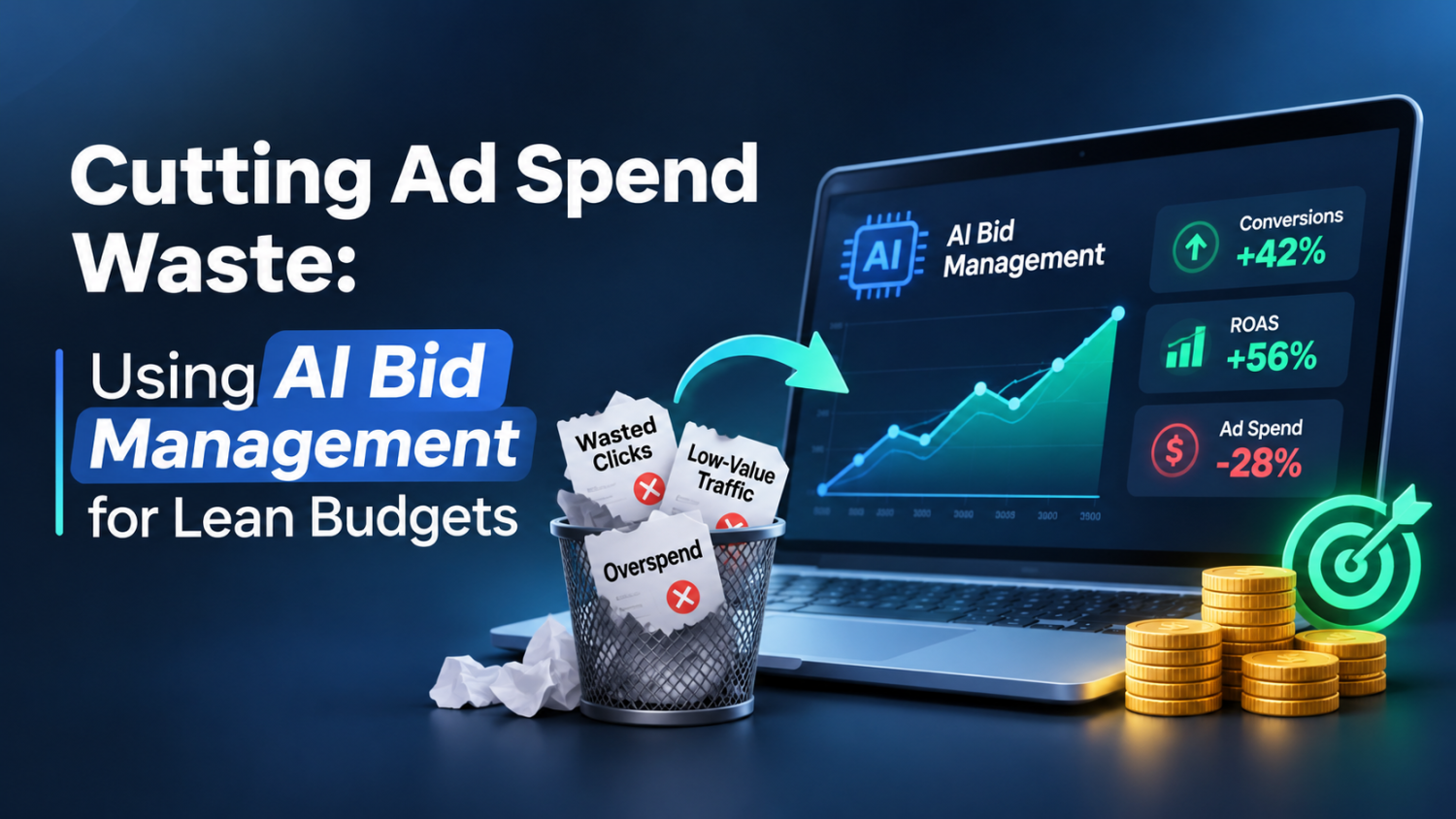
Cutting Ad Spend Waste: Using AI Bid Management for Lean Budgets
Ad spend waste is money lost on low-intent clicks. It comes from broad-match terms, poor timing, and bad automated bids. Brands cut this waste with smart bid management algorithms. These tools adjust bids in real time using your conversion data, target return on ad spend (tROAS), and local buyer intent.
Rising cost-per-click rates across the GCC force marketers to face a tough fact: old bidding models drain budgets fast. When scaling across Riyadh, Dubai, Cairo, or Beirut, bad media buys eat into profits. Poor targeting, runaway automation, and unchecked search terms waste cash that should go to high-converting buyers. As an AI digital marketing agency in Lebanon, Creatives builds performance engines that protect tight budgets while growing market share.
Quick Takeaways
- Cut Wasted Spend: Algorithmic bidding updates social and search bids by the millisecond. This protects your core budget from costly, low-converting views.
- Target Real Value: Feeding clean CRM data into Smart Bidding keeps ad networks from bidding on fake leads and empty clicks.
- Match Regional Needs: Machine learning paired with local negative keywords helps you handle language and dialect shifts across MENA markets.
What Causes Ad Spend Waste in Regional Paid Media?
Ad spend waste happens when keywords expand too far, auto-apply settings run unchecked, tracking breaks, and ads show in the wrong places. Marketers lose money when ad platforms chase cheap vanity views instead of real sales. This burns through lean budgets without driving revenue.
Manual bids cannot keep up with price spikes during peak shopping times like Ramadan, White Friday, and holidays. Search engines push default settings that favor high click counts over real acquisition efficiency. When brands use standard Smart Bidding without strict target CPA caps or first-party data limits, platforms spend money on broad, irrelevant search terms.
Our audits show brands bidding against regional partners or wasting money outside target areas. Teams in Beirut selling to Gulf buyers often overpay because they do not segment by local purchasing power and device use. Cutting waste means replacing platform defaults with disciplined algorithmic control.
How Does AI Bid Management Protect Lean Budgets?
AI bid management protects lean budgets through predictive models. These tools review millions of live signals at once, including device type, search intent, location, and time of day. The system raises bids for likely buyers and lowers bids on poor traffic.
Old rule-based systems update bids only once a day. This causes them to miss midday traffic shifts and fast competitor changes. Modern machine-learning systems score buyer intent at the exact time of the auction. If a search signals early research from a weak prospect, the system drops the bid or exits the auction entirely.
At Creatives, we test predictive bidding layers on top of standard ad engines to protect profits. When working with tight monthly budgets, our tech focuses on closed CRM deals rather than simple form fills. Partnering with an AI digital marketing agency in Lebanon gives mid-market brands enterprise tools without enterprise price tags.
How Should MENA Brands Localize Bidding Algorithms?
MENA brands localize bids by using bilingual intent mapping, local payment cues, and targeted dayparting. Calibrating AI models to tell Khaleeji, Levantine, and North African Arabic apart stops engines from wasting money on the wrong terms.
Language splits cause major budget leaks across the Arab world. A single product search term carries different buying intent in Jeddah than in Alexandria. Machine-learning bid models must use regional negative keyword lists for each dialect. This keeps English and Modern Standard Arabic terms from triggering on unrelated local slang.
Instead of running ads all day, smart bidding must match regional habits. Peak shopping hours in Saudi Arabia and the UAE run late into the evening, especially after Taraweeh prayers during Ramadan. Pausing bids during quiet hours and focusing budget on peak buying times protects lean budgets and lifts returns.
Why Must First-Party Data Feed Your AI Bidding Strategy?
First-party data improves AI bidding by replacing broken browser cookies with direct CRM sales data. Feeding real purchase values and lead scores into the system teaches algorithms to focus on users who resemble paying clients.
Relying on pixel data alone pushes platforms to chase weak actions like email sign-ups or mistaken WhatsApp clicks. These empty actions tell the machine that low-intent visitors are your ideal buyers. The bidding engine then spends more money on similar users, making the waste worse.
Our technical teams set up server-side tracking and offline conversion uploads through Google Ads and Meta CAPI. Linking offline sales directly to bidding tools tells the platform to target high-value buyers. As an AI digital marketing agency in Lebanon, we make sure algorithms know what real revenue looks like before you spend.
Comparative Evaluation: Bidding Frameworks for Lean Budgets
| Strategy Mechanism | Resource Efficiency | Waste Vulnerability | Conversion Precision | Regional Adaptability |
|---|---|---|---|---|
| Manual CPC Bidding | Low (Needs constant oversight) | High (Misses live auction spikes) | Low (Ignores user signals) | Medium (Hard to customize) |
| Platform-Default Smart Bidding | High (Fully automated) | High (Prioritizes platform goals) | Moderate (Chases cheap micro-goals) | Low (Misses local dialects) |
| Predictive AI Bidding + 1st-Party Data | High (Automates tactical shifts) | Low (Blocks poor auctions) | High (Focuses on closed sales) | High (Adapts to local markets) |
[Creatives Regional Data & Insight]
We set up server-side conversion tracking and predictive bid tools for a GCC interior design firm with a $4,500 monthly budget. In 60 days, our setup cut non-converting search clicks by 42.6%. This lowered the cost per qualified lead by 34.8% across Riyadh and Dubai. It also grew total inbound deal value by 2.1x without spending more on ads.
Scale Your Performance with Creatives
Lean budgets need sharp execution. If your budget leaks cash on broad clicks, platform defaults, and unsegmented auctions, growth will stall.
At Creatives, we build data-backed systems that make every dollar count across Lebanon, Saudi Arabia, the UAE, Qatar, and Egypt. Connect with our team today to audit your ad campaigns, stop budget waste, and set up predictive bidding built for profit.
Frequently Asked Questions
What constitutes direct ad spend waste in Google and Meta ads?
Direct ad spend waste includes cash spent on non-converting search queries, fraudulent display clicks, accidental video interactions, non-targeted geographic locations, and bot traffic. It also includes bidding on broad keywords without applying continuous negative keyword filters.
Can small businesses with modest budgets benefit from AI bid management?
Small businesses with lean budgets benefit most from AI bidding because they lack the capital margin to absorb wasted ad spend. Smart bidding rules protect constrained budgets by preventing overbidding on overpriced competitive search terms and prioritizing high-intent buyers.
Why should regional brands partner with an AI digital marketing agency in Lebanon?
Working with an ai digital marketing agency in Lebanon like Creatives gives regional businesses access to top-tier algorithmic performance engineering, deep bilingual MENA consumer fluency, and competitive operational cost advantages compared to regional legacy holding firms.
Ready to make AI data-driven decisions for your brand?
Creatives can help! Our approach is shaped by Generative Engine Optimization best practices.
Our team of AI-powered digital marketing experts can guide you in harnessing the power of data to achieve your marketing goals.
Schedule a consultation to learn how our AI-powered solutions can drive growth.